Robotics integration & product development

Marine Awareness: from working prototype to enclosure design

I assembled a LiDAR, camera and IMU prototype for marine operator awareness, integrated its mapping pipeline and developed an enclosure concept for the next stage.

Independent technical explorationSeptember 2026Working prototype · Validation ongoing
AI-assisted Marine Awareness enclosure concept in front and rear views, with a larger lower compute housing
Enclosure concept · AI-assisted visualisation based on my working prototype. This shows the proposed appearance, not manufactured hardware or validated marine performance.

The opportunity

Can a compact perception system provide useful situational awareness for an operator in urban waterways?

My contribution

I selected and integrated the sensors and x86 computer, set up the ROS and FAST-LIVO2 pipeline, and defined the operator-awareness use case. I used AI-assisted visualisation to explore an enclosure around the prototype; mechanical design and validation are next steps.

Concrete output

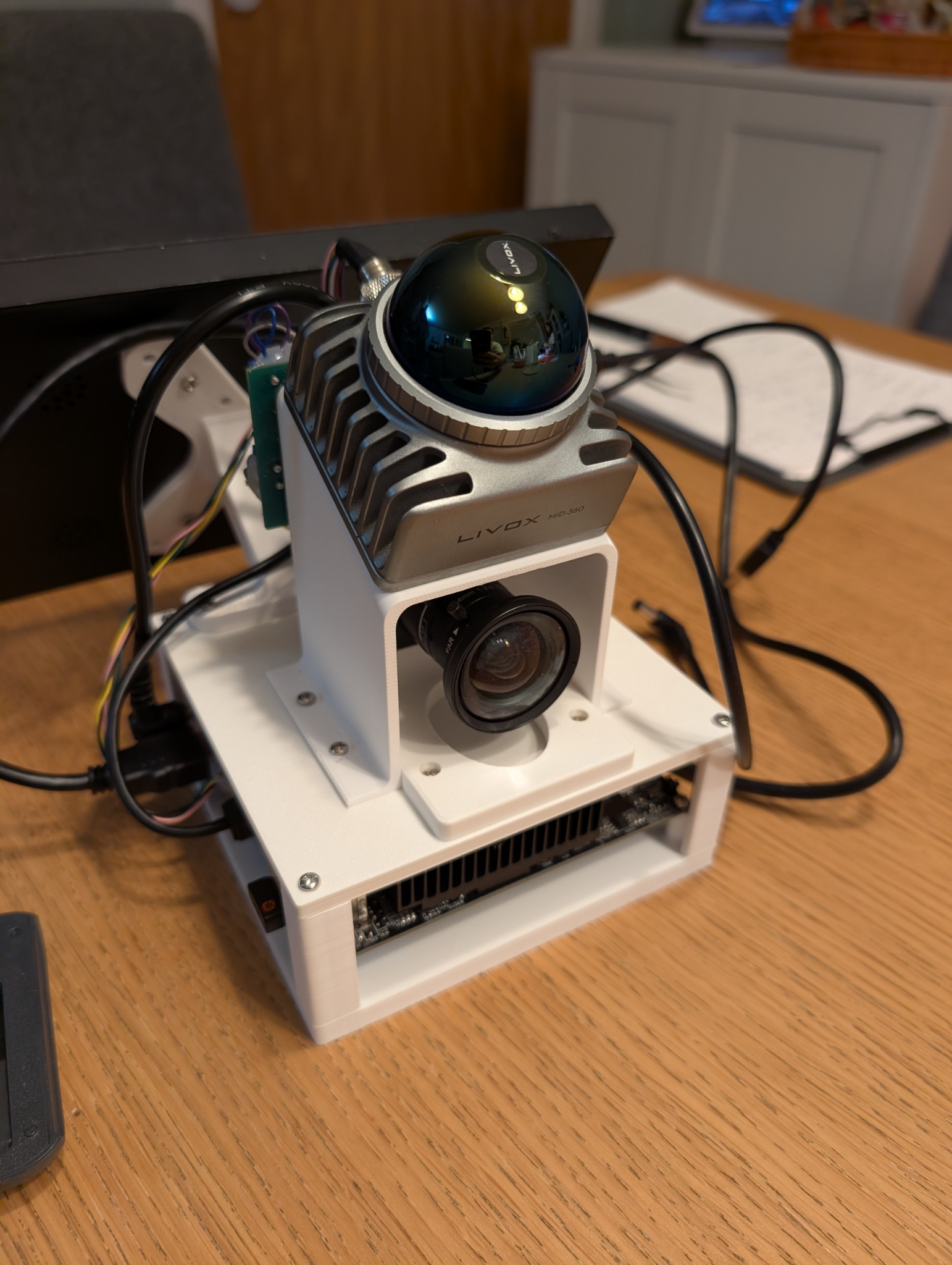
A Livox Mid-360 LiDAR, forward camera and AMD Ryzen 5 5600U x86 computer running ROS1 Noetic and FAST-LIVO2. The September evidence note records LiDAR, camera and mapping topics around 10 Hz and IMU around 200 Hz.

Evidence summary

A testable path from prototype to field use

FocusWorking summary
ObservedAssembled hardware and a working mapping pipeline.
Design directionAI-assisted enclosure concept with separate sensor and compute housings; mechanical engineering and testing still required.
Measure nextEnd-to-end latency, time synchronisation, CPU load and temperature.
Develop nextSemantic detection and useful operator presentation.
Validate laterVessel installation, environmental robustness and performance in representative conditions.

A concise summary of the case material, prepared for this portfolio.

Business relevance

Hands-on work helps me ask better supplier questions and distinguish a functioning component from a deployable product. It supports my commercial judgement on readiness and integration effort.

Supporting evidence

Physical prototype · September 2026 observations

Prototype photograph and runtime evidence note

Documents the assembled hardware and recorded ROS topic rates. Reliability and on-vessel validation remain next steps.

Anonymised summary; underlying working material can be discussed in context.
Current stage

The mapping prototype is working; the enclosed product is a design concept. FAST-LIVO2, ROS and the sensors are third-party technologies. Semantic detection, enclosure thermal performance, marine durability and on-vessel reliability remain to be validated.

The next step

Measure latency, synchronisation, CPU load and thermal behaviour. Translate the enclosure concept into mechanical requirements, then plan vessel installation and operator-awareness trials.